

Aviation
Overview
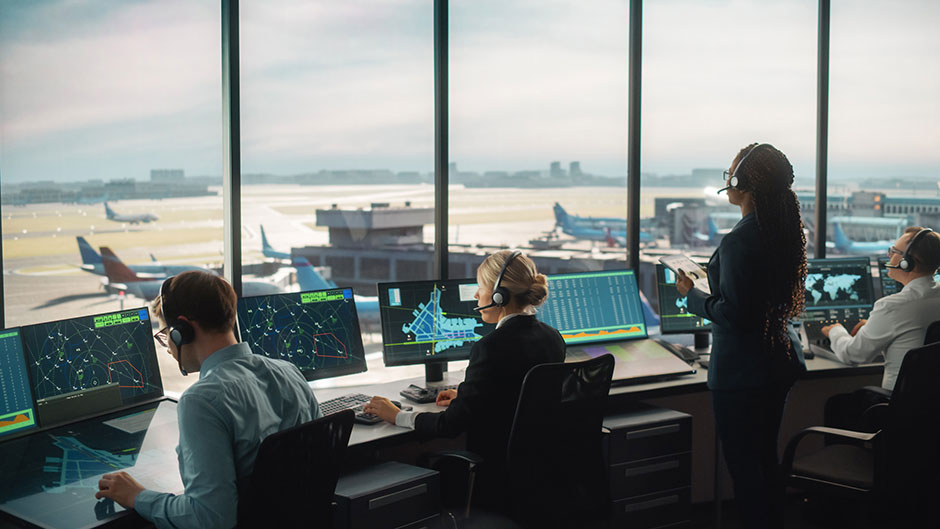
Whether you're seeking a Federal Aviation Administration (FAA) Aircraft Dispatcher certificate; want to pass your FAA Aeronautical Knowledge exams for Private, Instrument, Remote and Commercial Pilot and Instructor ratings; or simply want a well-rounded education before embarking on a professional aviation career; the Aviation Department is here to help you reach for the sky.
Cohorts
The Flight Technology and Aircraft Dispatcher courses that are required for a degree or certificate are conducted in face-to-face classroom environments at the SCC Main Campus. Students register for the full program each semester. Students may not register for individual courses, except for the prerequisite course.
Joining a Cohort
All Aviation programs operate with learning cohorts attending a series of short (4-week) intensive courses.
To receive course permission numbers to join the Fall learning cohort, you must meet the following prerequisites:
- Have already completed the prerequisite course, FLTEC 320 Private Pilot Ground (see below)
- Hold an FAA Airman Certificate with at least a PPL Airplane or Rotorcraft rating or an FAA Aircraft Dispatcher certificate or meet the requirements of 14 CFR 65.57(a)1, or 2
About FLTEC 320
- FLTEC 320 is the prerequisite course for joining the cohort.
- No permission numbers are required to register for FLTEC 320 in the Spring semester or Summer session.
- A grade of “C” or higher in this course will allow you to enter the Fall learning cohort, which begins with FLTEC 302 Aviation Weather
Benefits of Graduation
Sacramento City College maintains an FAA-authorized 14 CFR Part 65 Aircraft Dispatcher training program. Upon completion an A.S. degree or Certificate in Achievement in Aircraft Dispatch, you will receive the Certificate of Completion that is required to take your FAA Practical Exam for certification as an Aircraft Dispatcher (Flight Operations Officer for those interested in licensing outside of the United States). The Certificate of Completion is valid for ninety (90) days after course completion.
Career Options
Aircraft Dispatcher
Aircraft Dispatchers are employed by all major and regional airlines worldwide. Many jet charter and helicopter air ambulance operators, as well as government agencies and the military, utilize their services.
Flight Technology
Professional Pilots are employed as Charter Pilots, Flight Instructors, Ground Instructors, Agricultural Pilots, Helicopter Pilots, Flight Engineers, and Regional Airline/Major Airline Pilots, as well as working for Government Agencies or the Military.
Schedule an Appointment with Career Education
The Career Education Transitions Coordinator and Career Education Counselor are available to assist with:
- questions
- program exploration
- college applications
- educational planning
Program Maps
A.A./A.S. Degrees
- Aircraft Dispatcher A.S. Degree - Cal-GETC GE (Fall Start) Map
- Aircraft Dispatcher A.S. Degree - Local GE (Fall Start) Map
- Flight Technology A.S. Degree - Cal-GETC GE (Fall Start) Map
- Flight Technology A.S. Degree - Local GE (Fall Start) Map
- Professional Pilot A.S. Degree - Cal-GETC GE (Fall Start) Map
- Professional Pilot A.S. Degree - Local GE (Fall Start) Map
Certificates
- Dean Paul Estabrook
- Aviation Professor Dave Anderson
- Meta Major Business and Industry
- Phone (916) 558-2358
- Email AndersD3@scc.losrios.edu
Associate Degrees
A.S. in Aircraft Dispatcher
Sacramento City College maintains a Federal Aviation Administration (FAA) authorized 14 CFR Part 65 Aircraft Dispatcher (AD) Program. Our one-year certificate and two-year degree programs are designed to meet the needs of students who desire the technical training in order to qualify for the written, oral, and practical tests for the FAA Aircraft Dispatcher Certificate.
This is an intensive aviation program that brings participants with little or no aviation knowledge up to a knowledge level required by working aviation professionals. The program is taught in a two-semester sequenced cohort, with 12-15 credit units per semester. It is recommended that all general education requirements for the degree be completed before registering for the aviation-specific cohort classes.
All required courses must be passed with a grade of "C" or better.
In the final semester, students will be required to take the FAA Aeronautical Knowledge Test for Aircraft Dispatcher (ADX written). Students must be 21 years of age to take the exam. This exam is given on a PASS/FAIL basis by testing centers authorized by the FAA but not affiliated with Sacramento City College. Costs for the exam currently range from $150-$165.
Students who successfully complete the FAA written exam, and who receive an Aircraft Dispatcher program Certificate of Completion, are eligible to take the FAA Practical Exam. In accordance with FAA regulations, the authorization to take the exam is valid for 90 days after completion of the ATCAD 310 Aircraft Dispatcher Operations course. Sacramento City College normally makes arrangements to have an FAA Dispatch Examiner present at the college within that window. Costs for the Dispatch Practical Exam range from $600 to $1000.
Upon passing the FAA Practical Exam, graduates aged 23 years or more are certificated to perform the duties of an aircraft dispatcher for a 14 CFR Part 121 Air Carrier. Those who have not reached age 23 are issued an FAA Letter of Competency which may be presented to any FAA Flight Standards Office for issuance of the Aircraft Dispatcher certificate on or after their 23rd birthday.
Catalog Date: August 1, 2026
Degree Requirements
| Course Code | Course Title | Units |
|---|---|---|
| Enrollment Eligibility Course: | ||
| FLTEC 320 | Private Pilot Ground School | 4 |
| First Semester (Fall): | ||
| FLTEC 302 | Aviation Weather | 3 |
| FLTEC 304 | Human Factors and Risk Management in Aviation | 3 |
| FLTEC 306 | Federal Aviation Regulations | 3 |
| FLTEC 330 | Airplane Aerodynamics | 3 |
| Second Semester (Spring): | ||
| FLTEC 310 | Instrument Pilot/Instructor Ground School | 4 |
| FLTEC 312 | Air Navigation, Airspace, and Communication | 3 |
| FLTEC 314 | Large Aircraft Systems | 5 |
| FLTEC 321 | Commercial Pilot Ground School | 3 |
| Summer: | ||
| ATCAD 309 | Airline Operations and Performance | 3 |
| ATCAD 310 | Aircraft Dispatcher Operations | 3 |
| Total Units: | 37 | |
The Aircraft Dispatcher Associate in Science (A.S.) degree may be obtained by completion of the required program, and either (a) the Local General Education Pattern or (b) the California General Education Transfer Curriculum (Cal-GETC), plus sufficient electives for a total of at least 60 units. See SCC graduation requirements.
Enrollment Eligibility
To be eligible for enrollment in the program, the student must meet the following criteria:
- The Federal Aviation Administration requires that all applicants read, write, speak, and understand the English language. FAA guidance on language proficiency can be found in the current version of Advisory Circular AC60-28 and the Level 4 proficiency standards of ICAO Doc 9835.
- One of the following:
- a) Successful completion of FLTEC 320, Private Pilot Ground, OR
- b) Hold an FAA or ICAO-compliant Private Pilot certificate with a current biennial flight review (BFR), OR
- c) Have significant documented recent (within the last 5 years) military or civilian commercial aviation operations experience.
- The Federal Aviation Administration requires that applicants for the Aircraft Dispatcher written exam be at least 21 years of age. It is expected that students complete the FAA written exam after completing ATCAD 309, but before ATCAD 310 begins.
Student Learning Outcomes
Upon completion of this program, the student will be able to:
- perform the required duties of an Aircraft Dispatcher, as outlined by the Federal Aviation Administration.
- demonstrate a readiness to take the oral and practical examinations for the Federal Aviation Administration's aircraft dispatcher certificate.
- apply concepts learned such as weather analysis, large aircraft systems, regulations, and human factors to practical Aircraft Dispatcher problems.
Career Information
Aircraft Dispatchers are employed by all major and regional airlines worldwide. Outside of the United States, the aircraft dispatcher may be referred to as a Flight Operations Officer in accordance with the standards and recommended practices of the International Civil Aviation Organization (ICAO). Many jet charter and helicopter air ambulance operators, as well as government agencies and the military, utilize their services.
A.S. in Flight Technology
The Flight Technology A.S. Degree program is designed for students who want to pursue professional careers in aviation flight operations, or who wish to continue their aviation studies in a baccalaureate program.
During the course of the program the student will have the opportunity to qualify to take the written portions of the FAA Private, Instrument, Commercial Pilot, Basic and Advanced Ground Instructor and the Certified Flight Instructor Instrument examinations. Examinations are given at FAA-authorized locations not related to the college. Each exam is given on a PASS/FAIL basis, and costs between $150 and $165. Results of the exams are valid for 2 years after the date of examination.
This is an intensive, broad-based aviation program that brings participants with little or no aviation knowledge up to a knowledge level required by working aviation professionals. The program is taught in cohorts, with 12 to 15 credit units per semester. It is recommended that all general education requirements for the degree be completed before registering for aviation-specific cohort classes.
Catalog Date: August 1, 2026
Degree Requirements
| Course Code | Course Title | Units |
|---|---|---|
| Enrollment Eligibility Course: | ||
| FLTEC 320 | Private Pilot Ground School | 4 |
| First Semester (Fall): | ||
| FLTEC 302 | Aviation Weather | 3 |
| FLTEC 304 | Human Factors and Risk Management in Aviation | 3 |
| FLTEC 306 | Federal Aviation Regulations | 3 |
| FLTEC 330 | Airplane Aerodynamics | 3 |
| Second Semester (Spring): | ||
| FLTEC 310 | Instrument Pilot/Instructor Ground School | 4 |
| FLTEC 312 | Air Navigation, Airspace, and Communication | 3 |
| FLTEC 314 | Large Aircraft Systems | 5 |
| FLTEC 321 | Commercial Pilot Ground School | 3 |
| Total Units: | 31 | |
The Flight Technology Associate in Science (A.S.) degree may be obtained by completion of the required program, and either (a) the Local General Education Pattern or (b) the California General Education Transfer Curriculum (Cal-GETC), plus sufficient electives for a total of at least 60 units. See SCC graduation requirements.
Enrollment Eligibility
To be eligible for enrollment in the program, the student must meet the following criteria:
- The Federal Aviation Administration requires that all applicants read, write, speak, and understand the English language. FAA guidance on language proficiency can be found in the current version of Advisory Circular AC60-28 and the Level 4 proficiency standards of ICAO Doc 9835.
- One of the following:
- a) Successful completion of FLTEC 320, Private Pilot Ground, OR
- b) Hold an FAA or ICAO-compliant Private Pilot certificate with a current biennial flight review (BFR), OR
- c) Have significant documented recent (within the last 5 years) military or civilian commercial aviation operations experience.
Student Learning Outcomes
Upon completion of this program, the student will be able to:
- demonstrate the required knowledge and skills in order to qualify for the written portions of the Federal Aviation Administration examinations for pilot and instructor.
- perform navigational pre-flight planning.
- assemble and analyze terminal and en route weather data.
- calculate departure, en route, and arrival performance data.
- assess risk factors to aircraft operations and apply the appropriate safety and communications protocols to mitigate the risks.
Career Information
Professional Pilots are employed as Charter Pilots, Flight Instructors, Ground Instructors, Agricultural Pilots, Helicopter Pilots, Flight Engineers, and Regional Airline/Major Airline Pilots, as well as working for Government Agencies or the Military.
A.S. in Professional Pilot
The Professional Pilot A.S. Degree program is designed for students who want to pursue a professional career in aviation as a commercial pilot, or who wish to continue their aviation studies in a baccalaureate program.
During the course of the program the student will qualify to take the written portions of the FAA Private, Instrument and Commercial examinations. Examinations are given at FAA-authorized locations not related to the college. Each exam is given on a PASS/FAIL basis, and costs between $175 and $185. Results of the exams are valid for 2 years after the date of examination.
During the course of the program the student will also qualify to take the FAA Practical Tests for: Private Pilot-Single Engine Land, Commercial Pilot-Single Engine Land, and the Instrument Rating.
All flight training will be completed at partner flight schools, with the student enrolling in lab courses at SCC to obtain college credit for their flight training.
This is an intensive, pilot-focused aviation program that will bring participants with little or no aviation knowledge up to the level of an instrument-rated commercial pilot. The program is taught in cohorts, with 7-20 units per semester.
All required courses must be passed with a grade of "C" or better.
Catalog Date: August 1, 2026
Degree Requirements
| Course Code | Course Title | Units |
|---|---|---|
| Enrollment Eligibility Course: | ||
| FLTEC 200 | Introduction to Professional Pilot | 1 |
| First Semester (Summer): | ||
| FLTEC 320 | Private Pilot Ground School | 4 |
| FLTEC 360 | Private Pilot-Airplane Flight Techniques | 0.25 -3 |
| Second Semester (Fall): | ||
| FLTEC 302 | Aviation Weather | 3 |
| FLTEC 304 | Human Factors and Risk Management in Aviation | 3 |
| FLTEC 306 | Federal Aviation Regulations | 3 |
| FLTEC 330 | Airplane Aerodynamics | 3 |
| Third Semester (Spring): | ||
| FLTEC 310 | Instrument Pilot/Instructor Ground School | 4 |
| FLTEC 312 | Air Navigation, Airspace, and Communication | 3 |
| FLTEC 314 | Large Aircraft Systems | 5 |
| FLTEC 321 | Commercial Pilot Ground School | 3 |
| FLTEC 362 | Instrument Pilot-Airplane Flight Techniques | 0.25 -3 |
| FLTEC 364 | Commercial Pilot-Airplane Flight Techniques | 0.25 -3 |
| Total Units: | 32.75 - 41 | |
The Professional Pilot Associate in Science (A.S.) degree may be obtained by completion of the required program, and either (a) the Local General Education Pattern or (b) the California General Education Transfer Curriculum (Cal-GETC), plus sufficient electives for a total of at least 60 units. See SCC graduation requirements.
Enrollment Eligibility
To be eligible for enrollment in the program, the student must meet the following criteria:
- The Federal Aviation Administration requires that all applicants read, write, speak, and understand the English language. FAA guidance on language proficiency can be found in the current version of Advisory Circular AC60-28 and the Level 4 proficiency standards of ICAO Doc 9835.
- A minimum grade of "C" in FLTEC 200 Professional Pilot Orientation.
- Be at least 16.5 years of age at the time of enrollment.
- Student must obtain an FAA Class II Medical Certificate & FAA Student Pilot Certificate. No more than one alcohol-related motor vehicle action within three years, or more than three alcohol-related motor vehicle actions in any time period.
Enrollment Process
Eligible students are selected for the program according to the following steps:
- Admission to Sacramento City College.
- Enroll in FLTEC 200 Professional Pilot Orientation, and obtain a final grade of "C" or better.
- Obtain an FAA Class II Medical Certificate and FAA Student Pilot Certificate.
Student Learning Outcomes
Upon completion of this program, the student will be able to:
- exhibit satisfactory knowledge, risk management, and skills associated with airman and medical certificates including privileges, limitations, currency, and operating as pilot-in-command as a commercial rated pilot.
- exhibit satisfactory knowledge, risk management, and skills associated with airworthiness requirements, including airplane certificates.
- exhibit satisfactory knowledge, risk management, and skills associated with weather information for a flight under visual flight rules (VFR) and instrument flight rules (IFR).
- exhibit satisfactory knowledge, risk management, and skills associated with planning both cross-country VFR and IFR flights, and filing an IFR flight plan.
- exhibit satisfactory knowledge, risk management, and skills associated with National Airspace System (NAS) operations under VFR and IFR as a commercial pilot.
- exhibit satisfactory knowledge, risk management, and skills associated with operating an airplane safely within the parameters of its performance capabilities and limitations.
- exhibit satisfactory knowledge, risk management, and skills associated with safe operation of systems on the airplane provided for the flight test.
- exhibit satisfactory knowledge, risk management, and skills associated with personal health, flight physiology, and aeromedical and human factors related to safety of flight.
- exhibit satisfactory knowledge, risk management, and skills associated with preparation for safe flight.
- exhibit satisfactory knowledge, risk management, and skills associated with flight deck management practices.
- exhibit satisfactory knowledge, risk management, and skills associated with recommended engine starting procedures.
- exhibit satisfactory knowledge, risk management, and skills associated with taxi operations, including runway incursion avoidance.
- exhibit satisfactory knowledge, risk management, and skills associated with before takeoff check.
- exhibit satisfactory knowledge, risk management, and skills associated with normal and emergency radiocommunications, air traffic control (ATC) light signals, and runway lighting systems.
- exhibit satisfactory knowledge, risk management, and skills associated with traffic patterns
- exhibit satisfactory knowledge, risk management, and skills associated with normal takeoff, climb operations, and rejected takeoff procedures.
- exhibit satisfactory knowledge, risk management, and skills associated with normal approach and landing with emphasis on proper use and coordination of flight controls.
- exhibit satisfactory knowledge, risk management, and skills associated with soft-field takeoff, climb operations, and rejected takeoff procedures.
- exhibit satisfactory knowledge, risk management, and skills associated with soft-field approach and landing with emphasis on proper use and coordination of flight controls.
- exhibit satisfactory knowledge, risk management, and skills associated with short-field takeoff, maximum performance climb operations, and rejected takeoff procedures.
- exhibit satisfactory knowledge, risk management, and skills associated with short-field approach and landing with emphasis on proper use and coordination of flight controls.
- exhibit satisfactory knowledge, risk management, and skills associated with power-off 180� accuracy approach and landing.
- exhibit satisfactory knowledge, risk management, and skills associated with go-around/rejected landing with emphasis on factors that contribute to landing conditions that may require a go-around.
- exhibit satisfactory knowledge, risk management, and skills associated with steep turns.
- exhibit satisfactory knowledge, risk management, and skills associated with performing a missed approach procedure solely by reference to instruments
- exhibit satisfactory knowledge, risk management, and skills associated with chandelles.
- exhibit satisfactory knowledge, risk management, and skills associated with lazy eights
- exhibit satisfactory knowledge, risk management, and skills associated with eights on pylons.
- exhibit satisfactory knowledge, risk management, and skills associated with pilotage and dead reckoning.
- exhibit satisfactory knowledge, risk management, and skills associated with navigation systems and radar services.
- exhibit satisfactory knowledge, risk management, and skills associated with diversion.
- exhibit satisfactory knowledge, risk management, and skills associated with lost procedures and can take appropriate steps to achieve a satisfactory outcome if lost.
- exhibit satisfactory knowledge, risk management, and skills associated with maneuvering during slow flight in cruise configuration.
- exhibit satisfactory knowledge, risk management, and skills associated with power-on, power-off, and accelerated stalls.
- exhibit satisfactory knowledge of the causes and procedures for recovery from unintentional spins and understands the risk associated with unintentional spins.
- exhibit satisfactory knowledge, risk management, and skills associated with flight at higher altitudes where supplemental oxygen is required or recommended.
- exhibit satisfactory knowledge, risk management, and skills associated with flight in pressurized aircraft at high altitudes.
- exhibit satisfactory knowledge, risk management, and skills associated with emergency descent, emergency approach and landing procedures.
- exhibit satisfactory knowledge, risk management, and skills associated with performing circling, non-precision, and precision approach procedures.
- exhibit satisfactory knowledge, risk management, and skills associated with system and equipment malfunctions appropriate to the airplane provided for the practical test.
- exhibit satisfactory knowledge, risk management, and skills associated with emergency equipment, and survival gear appropriate to the airplane and environment encountered during flight.
- exhibit satisfactory knowledge, risk management, and skills associated with after landing, parking, securing procedures and checking flight instruments and equipment during postflight.
- exhibit satisfactory knowledge, risk management, and skills associated with anti-icing or deicing systems, and other systems related to IFR flight.
- exhibit satisfactory knowledge, risk management, and skills associated with managing instruments appropriate for an IFR flight.
- exhibit satisfactory knowledge, risk management, and skills associated with ATC clearances and procedures while operating solely by reference to instruments.
- exhibit satisfactory knowledge, risk management, and skills associated with performing basic flight maneuvers, recovering from unusual attitudes, and holding procedures solely by reference to instruments.
- exhibit satisfactory knowledge, risk management, and skills associated with loss of communications while operating solely by reference to instruments.
- exhibit satisfactory knowledge, risk management, and skills associated with performing an approach solely by reference to instruments with the loss of primary flight control instruments.
- exhibit satisfactory knowledge, risk management, and skills associated with intercepting and tracking navigation aids and arcs solely by reference to instruments.
- exhibit satisfactory knowledge, risk management, and skills associated with IFR departure, en route, and arrival operations solely by reference to instruments.
Career Information
Professional Pilots are employed as Charter Pilots, Flight Instructors, Ground Instructors, Agricultural Pilots, Bush Pilots, Survey Pilots, Helicopter Pilots, Flight Engineers, and Regional Airline/Major Airline Pilots as well as working for a Government Agency or the Military.
Certificates of Achievement
Aircraft Dispatcher Certificate
Sacramento City College maintains a Federal Aviation Administration (FAA) authorized 14 CFR Part 65 Aircraft Dispatcher (AD) Program. Our one-year certificate and two-year degree programs are designed to meet the needs of students who desire the technical training in order to qualify for the written, oral, and practical tests for the FAA Aircraft Dispatcher Certificate.
This is an intensive aviation program that brings participants with little or no aviation knowledge up to a knowledge level required by working aviation professionals. The program is taught in a two-semester sequenced learning cohort, with 12-15 credit units per semester.
All required courses must be passed with a grade of "C" or better.
In the final semester, students will be required to take the FAA Aeronautical Knowledge Test for Aircraft Dispatcher (ADX written). Students must be 21 years of age to take the exam. This exam is given on a PASS/FAIL basis by testing centers authorized by the FAA but not affiliated with Sacramento City College. Costs for the exam currently range from $150-$165.
Students who successfully complete the FAA written exam, and who receive an Aircraft Dispatcher program Certificate of Completion, are eligible to take the FAA Practical Exam. In accordance with FAA regulations, the authorization to take the exam is valid for 90 days after completion of the ATCAD 310 Aircraft Dispatcher Operations course. Sacramento City College normally makes arrangements to have an FAA Dispatch Examiner present at the college within that window. Costs for the Dispatch Practical Exam range from $600 to $1000.
Upon passing the FAA Practical Exam, graduates aged 23 years or more are certificated to perform the duties of an aircraft dispatcher for a 14 CFR Part 121 Air Carrier. Those who have not reached age 23 are issued an FAA Letter of Competency which may be presented to any FAA Flight Standards Office for issuance of the Aircraft Dispatcher certificate on or after their 23rd birthday.
Catalog Date: August 1, 2026
Certificate Requirements
| Course Code | Course Title | Units |
|---|---|---|
| FLTEC 320 | Private Pilot Ground School | 4 |
| FLTEC 302 | Aviation Weather | 3 |
| FLTEC 304 | Human Factors and Risk Management in Aviation | 3 |
| FLTEC 306 | Federal Aviation Regulations | 3 |
| FLTEC 330 | Airplane Aerodynamics | 3 |
| FLTEC 310 | Instrument Pilot/Instructor Ground School | 4 |
| FLTEC 312 | Air Navigation, Airspace, and Communication | 3 |
| FLTEC 314 | Large Aircraft Systems | 5 |
| FLTEC 321 | Commercial Pilot Ground School | 3 |
| ATCAD 309 | Airline Operations and Performance | 3 |
| ATCAD 310 | Aircraft Dispatcher Operations | 3 |
| Total Units: | 37 |
Enrollment Eligibility
To be eligible for enrollment in the program, the student must meet the following criteria:
- The Federal Aviation Administration requires that all applicants read, write, speak, and understand the English language. FAA guidance on language proficiency can be found in the current version of Advisory Circular AC60-28 and the Level 4 proficiency standards of ICAO Doc 9835.
- One of the following:
- a) Successful completion of FLTEC 320, Private Pilot Ground, OR
- b) Hold an FAA or ICAO-compliant Private Pilot certificate with a current biennial flight review (BFR), OR
- c) Have significant documented recent (within the last 5 years) military or civilian commercial aviation operations experience.
- The Federal Aviation Administration requires that applicants for the Aircraft Dispatcher written exam be at least 21 years of age. It is expected that students complete the FAA written exam after completing ATCAD 309, but before ATCAD 310 begins.
Student Learning Outcomes
Upon completion of this program, the student will be able to:
- perform the required duties of an Aircraft Dispatcher, as outlined by the Federal Aviation Administration.
- demonstrate a readiness to take the oral and practical examinations for the Federal Aviation Administration's aircraft dispatcher certificate.
- apply concepts learned such as weather analysis, large aircraft systems, regulations, and human factors to practical Aircraft Dispatcher problems.
Career Information
Aircraft Dispatchers are employed by all major and regional airlines worldwide. Outside of the United States, the aircraft dispatcher may be referred to as a Flight Operations Officer in accordance with the standards and recommended practices of the International Civil Aviation Organization (ICAO). Many jet charter and helicopter air ambulance operators, as well as government agencies and the military, utilize their services.
Flight Technology Certificate
Sacramento City College offers a one-year certificate program organized to offer aspiring pilots all the academic ground instruction required for the Federal Aviation Administration (FAA) Private and Commercial pilot certificates with an Instrument rating, and the Ground Instructor certificate with Advanced and Instrument ratings.
Students will also study large commercial aircraft systems.
During the course of the program the student will qualify to take the written portions of the FAA Private, Instrument, Commercial Pilot, Basic and Advanced Ground Instructor and the Certified Flight Instructor Instrument examinations. Examinations are given at FAA-authorized locations not related to the college. Each exam is given on a PASS/FAIL basis, and costs between $150 and $165. Results of the exams are valid for 2 years after the date of examination.
No actual flight training is available through Sacramento City College.
This is an intensive, broad-based aviation program that brings participants with little or no aviation knowledge up to a knowledge level required by working aviation professionals. The program is taught in cohorts, with 12 to 15 credit units per semester.
All required courses must be passed with a grade of "C" or better.
Catalog Date: August 1, 2026
Certificate Requirements
| Course Code | Course Title | Units |
|---|---|---|
| FLTEC 320 | Private Pilot Ground School | 4 |
| FLTEC 302 | Aviation Weather | 3 |
| FLTEC 304 | Human Factors and Risk Management in Aviation | 3 |
| FLTEC 306 | Federal Aviation Regulations | 3 |
| FLTEC 330 | Airplane Aerodynamics | 3 |
| FLTEC 310 | Instrument Pilot/Instructor Ground School | 4 |
| FLTEC 312 | Air Navigation, Airspace, and Communication | 3 |
| FLTEC 314 | Large Aircraft Systems | 5 |
| FLTEC 321 | Commercial Pilot Ground School | 3 |
| Total Units: | 31 |
Enrollment Eligibility
To be eligible for enrollment in the program, the student must meet the following criteria:
- The Federal Aviation Administration requires that all applicants read, write, speak, and understand the English language. FAA guidance on language proficiency can be found in the current version of Advisory Circular AC60-28 and the Level 4 proficiency standards of ICAO Doc 9835.
- One of the following:
- a) Successful completion of FLTEC 320, Private Pilot Ground, OR
- b) Hold an FAA or ICAO-compliant Private Pilot certificate with a current biennial flight review (BFR), OR
- c) Have significant documented recent (within the last 5 years) military or civilian commercial aviation operations experience.
Student Learning Outcomes
Upon completion of this program, the student will be able to:
- demonstrate the knowledge and skills to qualify for the written portions of the Federal Aviation Administration examinations for pilot and instructor.
- perform navigational pre-flight planning.
- assemble and analyze terminal and en-route weather data.
- calculate departure, en-route, and arrival performance data.
- assess risk factors to aircraft operations and apply the appropriate safety and communications protocols to mitigate the risks.
Career Information
Professional Pilots are employed as Charter pilots, Flight Instructors, Ground Instructors, Agricultural Pilots, Helicopter Pilots, Flight Engineers, and Regional Airline/Major Airline Pilots as well as working for a Government Agency or the Military.
Professional Pilot Certificate
Sacramento City College offers a two-year (including a summer session) certificate program organized to offer aspiring pilots all of the academic ground instruction, and all of the flight training required for the Federal Aviation Administration (FAA) Private, Commercial certificates with a Instrument rating.
During the course of the program the student will qualify to take the written portions of the FAA Private, Instrument and Commercial examinations. Examinations are given at FAA-authorized locations not related to the college. Each exam is given on a PASS/FAIL basis, and costs between $175 and $185. Results of the exams are valid for 2 years after the date of examination.
During the course of the program the student will also qualify to take the FAA Practical Tests for: Private Pilot-Single Engine Land, Commercial Pilot-Single Engine Land, and the Instrument Rating.
All flight training will be completed at partner flight schools, with the student enrolling in lab courses at SCC to obtain college credit for their flight training.
This is an intensive, pilot-focused aviation program that will bring participants with little or no aviation knowledge up to the level of an instrument-rated commercial pilot. The program is taught in cohorts, with 7 to 20 units per semester.
All required courses must be passed with a grade of "C" or better.
Catalog Date: August 1, 2026
Certificate Requirements
| Course Code | Course Title | Units |
|---|---|---|
| FLTEC 200 | Introduction to Professional Pilot | 1 |
| FLTEC 320 | Private Pilot Ground School | 4 |
| FLTEC 360 | Private Pilot-Airplane Flight Techniques | 0.25 -3 |
| FLTEC 302 | Aviation Weather | 3 |
| FLTEC 304 | Human Factors and Risk Management in Aviation | 3 |
| FLTEC 306 | Federal Aviation Regulations | 3 |
| FLTEC 330 | Airplane Aerodynamics | 3 |
| FLTEC 310 | Instrument Pilot/Instructor Ground School | 4 |
| FLTEC 312 | Air Navigation, Airspace, and Communication | 3 |
| FLTEC 314 | Large Aircraft Systems | 5 |
| FLTEC 321 | Commercial Pilot Ground School | 3 |
| FLTEC 362 | Instrument Pilot-Airplane Flight Techniques | 0.25 -3 |
| FLTEC 364 | Commercial Pilot-Airplane Flight Techniques | 0.25 -3 |
| Total Units: | 32.75 - 41 |
Enrollment Eligibility
To be eligible for enrollment in the program, the student must meet the following criteria:
- The Federal Aviation Administration requires that all applicants read, write, speak, and understand the English language. FAA guidance on language proficiency can be found in the current version of Advisory Circular AC60-28 and the Level 4 proficiency standards of ICAO Doc 9835.
- A minimum grade of "C" in FLTEC 200 Professional Pilot Orientation.
- Be at least 16.5 years of age at the time of enrollment.
- Student must attain an FAA Class II Medical Certificate. No more than one alcohol-related motor vehicle action within three years, or more than three alcohol-related motor vehicle actions in any time period.
Enrollment Process
Eligible students are selected for the program according to the following steps:
- Admission to Sacramento City College.
- Enroll in FLTEC 200 Professional Pilot Orientation, and obtain a final grade of "C" or better.
- Obtain FAA Class II Medical Certificate and FAA Student Pilot Certificate.
Student Learning Outcomes
Upon completion of this program, the student will be able to:
- exhibit satisfactory knowledge, risk management, and skills associated with airman and medical certificates including privileges, limitations, currency, and operating as pilot-in-command as a commercial rated pilot.
- exhibit satisfactory knowledge, risk management, and skills associated with airworthiness requirements, including airplane certificates.
- exhibit satisfactory knowledge, risk management, and skills associated with weather information for a flight under visual flight rules (VFR) and instrument flight rules (IFR).
- exhibit satisfactory knowledge, risk management, and skills associated with planning a cross-country VFR and IFR flights, and filing an IFR flight plan.
- exhibit satisfactory knowledge, risk management, and skills associated with National Airspace System (NAS) operations under VFR and IFR as a commercial pilot.
- exhibit satisfactory knowledge, risk management, and skills associated with operating an airplane safely within the parameters of its performance capabilities and limitations.
- exhibit satisfactory knowledge, risk management, and skills associated with safe operation of systems on the airplane provided for the flight test.
- exhibit satisfactory knowledge, risk management, and skills associated with personal health, flight physiology, and aeromedical and human factors related to safety of flight.
- exhibit satisfactory knowledge, risk management, and skills associated with preparation for safe flight.
- exhibit satisfactory knowledge, risk management, and skills associated with flight deck management practices.
- exhibit satisfactory knowledge, risk management, and skills associated with recommended engine starting procedures.
- exhibit satisfactory knowledge, risk management, and skills associated with taxi operations, including runway incursion avoidance.
- exhibit satisfactory knowledge, risk management, and skills associated with before takeoff check.
- exhibit satisfactory knowledge, risk management, and skills associated with normal and emergency radio communications, air traffic control (ATC) light signals, and runway lighting systems.
- exhibit satisfactory knowledge, risk management, and skills associated with traffic patterns.
- exhibit satisfactory knowledge, risk management, and skills associated with normal takeoff, climb operations, and rejected takeoff procedures.
- exhibit satisfactory knowledge, risk management, and skills associated with normal approach and landing with emphasis on proper use and coordination of flight controls.
- exhibit satisfactory knowledge, risk management, and skills associated with soft-field takeoff, climb operations, and rejected takeoff procedures.
- exhibit satisfactory knowledge, risk management, and skills associated with soft-field approach and landing with emphasis on proper use and coordination of flight controls.
- exhibit satisfactory knowledge, risk management, and skills associated with short-field takeoff, maximum performance climb operations, and rejected takeoff procedures.
- exhibit satisfactory knowledge, risk management, and skills associated with short-field approach and landing with emphasis on proper use and coordination of flight controls.
- exhibit satisfactory knowledge, risk management, and skills associated with power-off 180� accuracy approach and landing.
- exhibit satisfactory knowledge, risk management, and skills associated with go-around/rejected landing with emphasis on factors that contribute to landing conditions that may require a go-around.
- exhibit satisfactory knowledge, risk management, and skills associated with steep turns.
- exhibit satisfactory knowledge, risk management, and skills associated with performing a missed approach procedure solely by reference to instruments.
- exhibit satisfactory knowledge, risk management, and skills associated with chandelles.
- exhibit satisfactory knowledge, risk management, and skills associated with lazy eights.
- exhibit satisfactory knowledge, risk management, and skills associated with eights on pylons.
- exhibit satisfactory knowledge, risk management, and skills associated with pilotage and dead reckoning.
- exhibit satisfactory knowledge, risk management, and skills associated with navigation systems and radar services.
- exhibit satisfactory knowledge, risk management, and skills associated with diversion.
- exhibit satisfactory knowledge, risk management, and skills associated with lost procedures and can take appropriate steps to achieve a satisfactory outcome if lost.
- exhibit satisfactory knowledge, risk management, and skills associated with maneuvering during slow flight in cruise configuration.
- exhibit satisfactory knowledge, risk management, and skills associated with power-on, power-off, and accelerated stalls.
- exhibit satisfactory knowledge of the causes and procedures for recovery from unintentional spins and understands the risk associated with unintentional spins.
- exhibit satisfactory knowledge, risk management, and skills associated with flight at higher altitudes where supplemental oxygen is required or recommended.
- exhibit satisfactory knowledge, risk management, and skills associated with flight in pressurized aircraft at high altitudes.
- exhibit satisfactory knowledge, risk management, and skills associated with emergency descent, emergency approach and landing procedures.
- exhibit satisfactory knowledge, risk management, and skills associated with performing circling, non-precision, and precision approach procedures.
- exhibit satisfactory knowledge, risk management, and skills associated with system and equipment malfunctions appropriate to the airplane provided for the practical test.
- exhibit satisfactory knowledge, risk management, and skills associated with emergency equipment, and survival gear appropriate to the airplane and environment encountered during flight.
- exhibit satisfactory knowledge, risk management, and skills associated with after landing, parking, securing procedures and checking flight instruments and equipment during postflight.
- exhibit satisfactory knowledge, risk management, and skills associated with anti-icing or deicing systems, and other systems related to IFR flight.
- exhibit satisfactory knowledge, risk management, and skills associated with managing instruments appropriate for an IFR flight.
- exhibit satisfactory knowledge, risk management, and skills associated with ATC clearances and procedures while operating solely by reference to instruments.
- exhibit satisfactory knowledge, risk management, and skills associated with performing basic flight maneuvers, recovering from unusual attitudes, and holding procedures solely by reference to instruments.
- exhibit satisfactory knowledge, risk management, and skills associated with loss of communications while operating solely by reference to instruments.
- exhibit satisfactory knowledge, risk management, and skills associated with performing an approach solely by reference to instruments with the loss of primary flight control instruments.
- exhibit satisfactory knowledge, risk management, and skills associated with intercepting and tracking navigation aids and arcs solely by reference to instruments.
- exhibit satisfactory knowledge, risk management, and skills associated with IFR departure, en route, and arrival operations solely by reference to instruments.
Career Information
Professional Pilots are employed as Charter Pilots, Flight Instructors, Ground Instructors, Agricultural Pilots, Bush Pilots, Survey Pilots, Helicopter Pilots, Flight Engineers, and Regional Airline/Major Airline Pilots as well as working for a Government Agency or the Military.
Air Traffic Control and Aircraft Dispatcher (ATCAD) Courses
ATCAD 300 Basic Terminal Procedures
- Units:3.5
- Hours:45 hours LEC; 54 hours LAB
- Prerequisite:FLTEC 302, 304, 306, 310, 314, 319, 320, 321, and 330 with grades of "C" or better
- Transferable:CSU
- Catalog Date:August 1, 2026
This course provides lecture and simulator lab experience in the fundamental concepts of procedures and skills related to Terminal Radar Control (TRACON) operations. Areas such as aircraft identification, voice communication, phraseology, facility and inner-facility coordination, strip markings, airport traffic control, and TRACON functions will be taught and practiced.
Student Learning Outcomes
Upon completion of this course, the student will be able to:
- control, via airport simulation, aircraft utilizing ground movement, approach and departure procedures.
- use proper phraseology and acronyms when communicating within the Air Traffic Control (ATC) system.
- apply procedures and regulations pertaining to ground movements, approach, and departure.
- identify aircraft types and separation procedures.
ATCAD 301 Advanced Terminal Procedures
- Units:3.5
- Hours:45 hours LEC; 54 hours LAB
- Prerequisite:FLTEC 302, 304, 306, 310, 314, 319, 320, 321, and 330 with grades of "C" or better
- Transferable:CSU
- Catalog Date:August 1, 2026
This course continues the training of ATCAD 300 with lecture and simulator lab experience in more advanced concepts of procedures and skills related to Terminal Radar Control (TRACON) operations. Advanced topics in aircraft identification, voice communication, phraseology, facility and inner-facility coordination, strip markings, air traffic control, TRACON functions, runway visibility, weather observations, communication failures, and emergencies will be taught and practiced. One field trip to an operating TRACON facility may be scheduled.
Student Learning Outcomes
Upon completion of this course, the student will be able to:
- control, via radar simulation, of multiple mixed-type aircraft utilizing approach and departure procedures.
- prioritize communications, using proper phraseology and acronyms when communicating within the Air Traffic Control (ATC) system.
- apply procedures and regulations pertaining to approach and departure of mixed traffic.
- identify aircraft types and separation procedures.
- determine runway visibility.
- estimate and record weather observations.
- assess communication and related equipment failure.
- assess common in-flight emergencies.
ATCAD 302 Basic En Route Procedures
- Units:3.5
- Hours:45 hours LEC; 54 hours LAB
- Prerequisite:FLTEC 302, 304, 306, 310, 314, 319, 320, 321, and 330 with grades of "C" or better
- Transferable:CSU
- Catalog Date:August 1, 2026
This course provides lecture and simulator lab experience in the fundamental rules and procedures required in the en route environment. Areas such as air-to-ground and ground-to-air communications, radar control, Visual Flight Rules (VFR) and Instrument Flight Rules (IFR) en route procedures, aircraft identification, voice communications, phraseology, facility and inter-facility coordination, strip markings, and clearances will be taught and practiced.
Student Learning Outcomes
Upon completion of this course, the student will be able to:
- apply procedures and regulations pertaining to en route operations.
- identify aircraft types and separation procedures.
- use proper phraseology and acronyms when communicating within the Air Traffic Control (ATC) system.
- control aircraft, via radar simulation, utilizing en route procedures.
ATCAD 303 Advanced En Route Procedures
- Units:3.5
- Hours:45 hours LEC; 54 hours LAB
- Prerequisite:FLTEC 302, 304, 306, 310, 314, 319, 320, 321, and 330 with grades of "C" or better
- Transferable:CSU
- Catalog Date:August 1, 2026
This course is a continuation of ATCAD 302 provides lecture and simulator lab experience in advanced rules and procedures required in the en route environment. Areas such as air-to-ground and ground-to-air communication, radar control, Visual Flight Rules (VFR) and Instrument Flight Rules (IFR) en route procedures, aircraft identification, communication failures, clearances, strip markings, radio and satellite navigation systems, aviation weather services, and emergency procedures in complex airspaces and across multiple positions will be taught and practiced.
Student Learning Outcomes
Upon completion of this course, the student will be able to:
- apply procedures and regulations pertaining to en route operations in complex airspaces.
- identify aircraft types and separation procedures.
- use proper phraseology and acronyms when communicating within the Air Traffic Control (ATC) system across multiple en route positions.
- control, via radar simulation, aircraft utilizing en route procedures.
- identify and then brief for en route weather changes.
- assess communication and related equipment failure.
- assess common en route flight emergencies.
ATCAD 309 Airline Operations and Performance
- Units:3
- Hours:54 hours LEC
- Prerequisite:FLTEC 302, 304, 306, 310, 314, 320, and 330 with grades of "C" or better; Students who do not wish to pursue a degree or certificate from Sacramento City College and who meet the experience and recency requirements of 14 CFR 65.57(a) may enroll after completing FLTEC 314.
- Advisory:Students be prepared to take the FAA ADX aeronautical knowledge exam at or before the completion of the course. The exam is administered by FAA-contracted testing facilities. Current charges are $150-$165. Students under the age of 21 will take instructor-developed exams. Students must be 21 years of age or more to take the exam.
- Transferable:CSU
- Catalog Date:August 1, 2026
This course introduces advanced subject matter in relation to airline operations regulations, weight and balance, winter operations, and calculating aircraft performance and limitations for a variety of large turboprop and turbojet aircraft.
The course will prepare the student to take the Federal Aviation Administration's (FAA) Aeronautical Knowledge exam for Aircraft Dispatcher (ADX).
Students should complete the ADX by the end of the course. The exam is offered at FAA contract testing sites not affiliated with Sacramento City College. Current costs for the exam range from $150-$165. These costs are not included in the enrollment fees for this course.
FAA regulations (14 CFR 65.53(a)) requires that a person be at least 21 years of age to take the required ADX aeronautical knowledge exam. Students under the age of 21 will be required to take instructor-developed exams.
Student Learning Outcomes
Upon completion of this course, the student will be able to:
- interpret federal aviation regulations specifically targeting air carrier operations and certification (14 CFR Parts 119, 120, 121).
- compute takeoff, en route, and landing performance for CRJ200, DC-9, Q400, B1900, and C208 aircraft using manufacturer performance tables and graphs.
- compute aircraft weight and balance information for specified loads for passenger and cargo aircraft.
- identify and interpret operations documents required for air carrier flights.
- analyze and interpret local, regional, and hemispheric weather patterns from National Weather Service World Meteorological Organization aviation weather products, and explain weather effects on flight.
- describe the challenges of winter weather operations and procedures and tools used by air carriers to maintain safe operations.
- delineate the duties and training requirements of an aircraft dispatcher.
ATCAD 310 Aircraft Dispatcher Operations
- Units:3
- Hours:54 hours LEC
- Prerequisite:ATCAD 309 with a grade of "C" or better; Students should have completed the Federal Administration's aeronautical knowledge exam for Aircraft Dispatcher before the class begins.
- Transferable:CSU
- Catalog Date:August 1, 2026
This course will allow the student to practice actual flight preparations as an aircraft dispatcher under various conditions. This course leads to FAA certification as an Aircraft Dispatcher. Required areas of instruction will include weather, performance data, weight and balance calculations, and special conditions encountered in flight planning.
This course is required under 14 CFR Part 65 Appendix A Section VIII of Sacramento City College's FAA-authorized Part 65 Aircraft Dispatcher training program. Students who successfully complete this course will be eligible for a 14 CFR Part 65 course Certificate of Completion, valid for 90 days, that will authorize them to take the FAA Aircraft Dispatcher Practical Exam with an FAA Aviation Safety Inspector-Dispatch or Designated Aircraft Dispatch Examiner. Practical Dispatch examinations are not given by Sacramento City College, can require fees of $600-$1000.
Students who do not pass an FAA Aircraft Dispatcher Practical exam within 90 days of successfully completing the course as required by 14 CFR 65.70(2)(b) may retake the course up to two additional times.
Students must complete ATCAD 309, Airline Operations and Performance and show evidence of having completed the FAA Aircraft Dispatcher aeronautical knowledge exam (ADX) before beginning the course.
Student Learning Outcomes
Upon completion of this course, the student will be able to:
- determine if a Part 121 would be legal under Federal Aviation Regulations and an airline's Operations Specifications (OpSpecs).
- calculate aircraft weight and balance and determine if it is within appropriate parameters.
- calculate aircraft performance for takeoff, climb, cruise, descent, and landing.
- analyze low altitude, high altitude, and terminal weather forecasts.
- brief a flight crew on the parameters of a designated flight.
Flight Technology (FLTEC) Courses
FLTEC 200 Introduction to Professional Pilot
- Units:1
- Hours:18 hours LEC
- Prerequisite:None.
- Catalog Date:August 1, 2026
This introductory course is designed for students desiring to enter the professional pilot flight training program. This course is a prerequisite for FLTEC 360 Private Pilot-Airplane Flight Techniques, FLTEC 362 Instrument Pilot-Airplane Flight Techniques, and FLTEC 364 Commercial Pilot-Airplane Flight Techniques. Course content includes instruction in required Federal Aviation Administration (FAA) Integrated Airman Certification and Rating Application (IACRA) account, student pilot certificate, MEDXPRESS medical certificate, Homeland Security compliance, and initial pre-solo flight training requirements.
Student Learning Outcomes
Upon completion of this course, the student will be able to:
- establish an FAA IACRA (Federal Aviation Administration Integrated Airman Certification and Rating Application) account.
- obtain an FAA student pilot certificate.
- establish an FAA MEDXPRESS account.
- obtain a first, second, or third class FAA medical certificate.
- obtain an FCC (Federal Communications Commission) restricted radio telephone operators license.
- obtain a Homeland Security check that will allow the student pilot to receive flight instruction.
FLTEC 202 Introduction to Drones
- Units:0.5
- Hours:9 hours LEC
- Prerequisite:None.
- Catalog Date:August 1, 2026
This introductory course is designed for students desiring to work in the unmanned aircraft systems industry or obtain a Federal Aviation Administration (FAA) Part 107 Remote Pilot Certification. This course will prepare students with the foundational knowledge about drone technology, industry applications, safety regulations, and hands-on operational experience.
Student Learning Outcomes
Upon completion of this course, the student will be able to:
- understand basic unmanned aircraft systems (UAS) technology, industry applications, and safety regulations.
- display a basic operational knowledge of unmanned aircraft systems and flight vehicles.
- describe basic unmanned aircraft systems flight mechanics and aerodynamics.
- explain basic navigation and airspace for unmanned aircraft systems.
FLTEC 204 Remote Pilot Certificate Test Preparation
- Units:1
- Hours:18 hours LEC
- Prerequisite:None.
- Advisory:FLTEC 206 and 208 with grades of "C" or better
- Catalog Date:August 1, 2026
This course prepares the student to take the Federal Aviation Administration (FAA) aeronautical knowledge test that is required for the issuance of a Remote Pilot - Small Unmanned Aircraft Systems certificate. Topics include federal and state regulations governing the use of Unmanned Aircraft Systems, airspace and aeronautical chart reading, aviation weather, and crew resource management. This course may be taken concurrently with FLTEC 208, for students who do not already have an FAA Part 107 Remote Pilot Certification.
Student Learning Outcomes
Upon completion of this course, the student will be able to:
- demonstrate knowledge of Federal Aviation Administration (FAA) regulations and operating requirements in regards to weather and aircraft performance, aeronautical knowledge and FAA procedures associated with unmanned aircraft systems.
FLTEC 206 Remote Pilot Ground School
- Units:1
- Hours:18 hours LEC
- Prerequisite:None.
- Catalog Date:August 1, 2026
The basic principles of flight, meteorology, navigation, communication, weight and balance, UAS systems and instruments, performance, flight procedures, and regulations will be explained. The course provides the necessary information that will enable the student to be competent to operate a Drone.
Student Learning Outcomes
Upon completion of this course, the student will be able to:
- obtain a weather briefing, then interpret and apply the contents by explaining the impact of the conditions to a flight plan and aircraft performance.
- analyze a flight mission, identify the airspace, regulatory, and legal requirements, and explain what additional information is required and where and how to obtain it.
- evaluate a flight mission, obtain all available information, and make and justify a "go/no go" decision.
FLTEC 208 Remote Pilot Flight School
- Units:2
- Hours:18 hours LEC; 54 hours LAB
- Prerequisite:FLTEC 206 with a grade of "C" or better
- Catalog Date:August 1, 2026
This course is designed to give students practical experience in conducting commercial unmanned aerial vehicle flight operations. Students will develop basic flying skills and experience with small multi-rotor and fixed-wing unmanned aircraft. The course also includes gaining experience in developing and utilizing flight operations documentation and checklists. Students will be able to utilize these skills when using commercial unmanned aerial vehicle (UAV) systems in a variety of future employment and research opportunities.
Student Learning Outcomes
Upon completion of this course, the student will be able to:
- obtain, analyze, and continuously evaluate site weather to ensure compliance with applicable regulations and limitations specified in flight operations documentation.
- operate a small multirotor unmanned aircraft system within visual range in manual mode.
- operate a small multirotor unmanned aircraft system using an automated flight planning profiles.
- recognize and correctly respond to inflight failures and safely terminate a flight.
- identify site-specific hazards and implement appropriate risk mitigation steps.
- coordinate communications between members of an operations team during flight operations.
- operate a simulated fixed-wing drone beyond visual line-of-sight.
- interpret operating rules and requirements under Part 107 regulations.
- implement general regulatory requirements of Part 107 regulations.
FLTEC 210 Aerial Photography
- Units:2
- Hours:18 hours LEC; 54 hours LAB
- Prerequisite:FLTEC 204, 206, and 208 with grades of "C" or better; or equivalent
- Enrollment Limitation:Student must possess a current FAA Part 107 Remote Pilot Certification to rent equipment.
- Catalog Date:August 1, 2026
This course will prepare and train students in the latest aerial data capture and imaging techniques used commercially with remote drone pilots. The course is designed for those already certified by the FAA (Remote Pilot - Small UAS under 14 CFR Part 107) and pursuing competent skills in both navigating while simultaneously capturing and imaging destinations and activities specific to their industry. Topics include individual or team flight capture and imaging techniques, video vs. still capture compositions, effective gimbal operation and dynamic pre programmed flight capture. The course will also train students to edit and merge content for presentation in person and on the Internet. Student must possess a current FAA Part 107 Remote Pilot Certification to attend course.
Students must be FAA certified to rent any equipment from the college for insurance requirements.
Student Learning Outcomes
Upon completion of this course, the student will be able to:
- demonstrate competent flight operation while capturing data individually and as a team.
- demonstrate and employ a variety of compositional techniques with and without gimbal operation for both video and still capture.
- demonstrate competent knowledge and practice of FAA 14 CFR Part 107 Remote Pilot - Small UAS regulations during pre-flight, piloting, and post-flight operation.
- demonstrate basic computer-aided video editing techniques.
- systematically organize images, video, and sound in editing software.
FLTEC 212 Photogrammetry
- Units:1
- Hours:9 hours LEC; 27 hours LAB
- Prerequisite:FLTEC 204, 206, 208, and 210 with grades of "C" or better; Students may already be certified by the FAA to fly unmanned aircraft systems.
- Enrollment Limitation:Student must possess a current FAA Part 107 Remote Pilot Certification to rent equipment.
- Catalog Date:August 1, 2026
This course provides an introduction to the principles and applications of photogrammetry, the science of obtaining reliable measurements and three-dimensional (3D) data from photographs and imagery. Students will explore aerial and terrestrial photogrammetry techniques, image processing software, and data interpretation methods used in fields such as geospatial mapping, remote sensing, and 3D modeling. Emphasis is placed on hands-on learning using drones and specialized photogrammetry software to collect, process, and analyze spatial data. Real-world case studies will be examined to demonstrate how photogrammetry is used in topographic mapping, construction site monitoring, agriculture, archaeology, and other industries. Students must be FAA certified to rent any equipment from the college for insurance requirements.
Student Learning Outcomes
Upon completion of this course, the student will be able to:
- explain the fundamental principles and history of photogrammetry.
- utilize photogrammetric techniques to generate accurate 3D models and maps.
- process aerial and terrestrial imagery using industry-standard software.
- operate drones and cameras to capture georeferenced imagery for photogrammetric applications.
- identify career pathways and industry applications for photogrammetry in surveying, urban planning, and environmental monitoring.
FLTEC 214 Drone Inspections
- Units:1
- Hours:9 hours LEC; 27 hours LAB
- Prerequisite:FLTEC 204, 206, and 208 with grades of "C" or better; or equivalent
- Enrollment Limitation:Student must possess a current FAA Part 107 Remote Pilot Certification to rent equipment.
- Catalog Date:August 1, 2026
This course is designed to give students an in-depth understanding of drone technology, with a specific focus on aerial inspections in various industries. Students will learn how to operate drones safely and effectively for inspection purposes, including infrastructure, construction sites, utilities, agriculture, and real estate. The course covers fundamental flight operations, data collection techniques, image and video analysis, and regulatory compliance associated with the FAA's Part 107 certification. Through hands-on training and real-world simulations, students will gain proficiency in drone-based inspections, understand industry best practices, and explore career opportunities in the growing field of unmanned aerial systems (UAS). Students must be FAA certified to rent any equipment from the college for insurance requirements.
Student Learning Outcomes
Upon completion of this course, the student will be able to:
- understand drone regulations and safety, including those associated with the Code of Federal Regulations (CFR) Part 107.
- demonstrate safe drone operation and emergency procedures.
- master flight operations and data collection.
- conduct pre-flight and post-flight inspections.
- plan and execute autonomous drone flights for inspections.
- utilize drone technology for inspections.
- capture high-resolution images for infrastructure assessments.
- use thermal and multispectral imaging for specialized inspections.
- process aerial imagery using industry software.
- generate reports and actionable insights for clients or employers.
FLTEC 216 First Person View (FPV)
- Units:1
- Hours:9 hours LEC; 27 hours LAB
- Prerequisite:FLTEC 204, 206, and 208 with grades of "C" or better; or equivalent
- Enrollment Limitation:Student must possess a current FAA Part 107 Remote Pilot Certification to rent equipment.
- Catalog Date:August 1, 2026
This course provides students with an in-depth introduction to First-Person View (FPV) drone technology, covering the principles of FPV flight, maintenance, and piloting techniques. Students will gain hands-on experience flying FPV drones, and applying FAA regulations for safe and legal operations. The course emphasizes both recreational and commercial applications, preparing students for careers in drone racing, cinematography, industrial inspections, and emerging FPV-based industries. Students must be FAA certified to rent any equipment from the college for insurance requirements.
Student Learning Outcomes
Upon completion of this course, the student will be able to:
- explain the fundamentals of First-Person View (FPV) drone technology.
- demonstrate proficiency in manual and stabilized FPV flight, executing controlled maneuvers in both simulator and real-world environments.
- perform advanced maneuvers like rolls, flips, split-S, and power loops.
- describe commercial applications of FPV drones.
- demonstrate inspection applications that include power lines, infrastructure, and industrial maintenance.
- demonstrate emergency response that include search and rescue, law enforcement, and disaster assessment.
- describe the competitive drone racing and freestyle flying as a career path
FLTEC 294 Topics in Aeronautics, Flight Technology
- Units:0.5 - 4
- Hours:9 - 72 hours LEC
- Prerequisite:None.
- Catalog Date:August 1, 2026
This is a specialized course developed in conjunction with industry partners to address emerging training needs.
Student Learning Outcomes
Upon completion of this course, the student will be able to:
- identify emerging trends and new technology in the aviation/aerospace industries.
- develop processes and procedures to adapt to changing environments and integrate new technologies into industry.
FLTEC 295 Independent Studies in Flight Technology
- Units:1 - 3
- Hours:54 - 162 hours LAB
- Prerequisite:None.
- Catalog Date:August 1, 2026
This course allows students to have a learning experience in flight technology that is not currently covered by other course curriculum. This is an independent studies course. The topics are to be arranged between the instructor and the student.
Student Learning Outcomes
Upon completion of this course, the student will be able to:
- demonstrate understanding of the flight technology concepts studied in the course.
- demonstrate competence in the flight technology skills studied in the course.
FLTEC 300 Introduction to Aviation
- Units:3
- Hours:54 hours LEC
- Prerequisite:None.
- Transferable:CSU
- Catalog Date:August 1, 2026
This introductory course is designed for aviation career exploration in areas such as pilots, air traffic controllers, aircraft dispatchers, and aircraft maintenance technicians. This course will explore the fundamentals of aircraft structures and theory of flight, as well as the history and development of the aviation industry.
Student Learning Outcomes
Upon completion of this course, the student will be able to:
- apply and explain the basic theory of flight.
- identify and correctly utilize nomenclature of typical aircraft and explain functions.
- evaluate the significance of major aviation events and individuals.
- explain how and why a specific event or individual was important to aviation progress.
- identify specific occupations and organizations common to commercial aviation.
- evaluate flight planning tools, methods, and criteria utilized in the national airspace system.
FLTEC 302 Aviation Weather
- Units:3
- Hours:54 hours LEC
- Prerequisite:FLTEC 320 with a grade of "C" or better; or hold FAA Private Pilot Certificate, or successfully completed FAA Private Pilot Knowledge exam.
- Transferable:CSU
- Catalog Date:August 1, 2026
This aviation related meteorology course is designed for pilots, air traffic controllers, and aircraft dispatchers. It covers basic weather phenomena, hazards, and prognostics as they apply to flight. Use and interpretation of Federal Aviation Administration (FAA) and National Weather Service (NWS) meteorological services are also explained.
Student Learning Outcomes
Upon completion of this course, the student will be able to:
- choose the appropriate Federal Aviation Administration (FAA) and National Weather Service (NWS) meteorological information that applies to a flight.
- analyze and evaluate the selected information and decide if the weather conditions are conducive to a safe and legal flight.
- identify the correct answer to weather related test questions on various Federal Aviation Agency airmen certificate and rating knowledge exams.
- use National Weather Service and approved World Meteorological Organization source products to develop and deliver a weather briefing for a transoceanic international flight.
FLTEC 303 Remote Pilot - Small Unmanned Aircraft Systems
- Units:3
- Hours:54 hours LEC
- Prerequisite:None.
- Advisory:The minimum age for issuance of an FAA Remote Pilot - sUAS certificate is 16 years of age. Certificates are issued subject to the results of a Transportation Security Administration personal threat assessment.
- Transferable:CSU
- Catalog Date:August 1, 2026
This course prepares the student to take the FAA aeronautical knowledge test that is required for the issuance of a Remote Pilot - Small Unmanned Aircraft Systems certificate. Topics include federal and state regulations governing the use of Unmanned Aircraft Systems, airspace and aeronautical chart reading, aviation weather, and crew resource management.
Student Learning Outcomes
Upon completion of this course, the student will be able to:
- demonstrate necessary knowledge to take the Federal Aviation Administration (FAA) aeronautical knowledge exam for Remote Pilot - Small Unmanned Aircraft Systems (sUAS) certificate.
- obtain a weather briefing; then interpret and apply the contents by explaining the impact of the conditions to a flight plan and aircraft performance.
- analyze a flight mission, identify the airspace, regulatory, and legal requirements, and explain what additional information is required and where and how to obtain it.
- conduct a preflight crew briefing that enumerates risk factors and mitigation steps that will allow for a safe flight, including actions to be taken in case of an emergency.
- evaluate a flight mission, obtain all available information, and make and justify a "go/no go" decision.
FLTEC 304 Human Factors and Risk Management in Aviation
- Units:3
- Hours:54 hours LEC
- Prerequisite:FLTEC 320 with a grade of "C" or better; or hold FAA Private Pilot Certificate, or successfully completed FAA Private Pilot Knowledge exam.
- Transferable:CSU
- Catalog Date:August 1, 2026
This course provides an overview of human factors that relate to aviation operations safety, risk evaluation and management, aeronautical decision making, and crew resource management. These factors will be used in analyzing how humans contribute to aircraft accidents and in developing risk management strategies.
Student Learning Outcomes
Upon completion of this course, the student will be able to:
- evaluate what human factors may affect the pilot's or controller's ability to make correct aeronautical decisions.
- compile a checklist of relevant criteria for making a go-no-go decision.
- evaluate an aircraft incident or accident report and identify and classify contributing human factors.
FLTEC 305 Remote Pilot Flight Operations
- Units:3
- Hours:24 hours LEC; 90 hours LAB
- Prerequisite:Must meet one of the following: Successful completion of or concurrent enrollment in FLTEC 303, or hold a current FAA Remote Pilot -Small Unmanned Aircraft Systems certificate.
- Enrollment Limitation:Performance of actual flights are subject to acceptable weather and airspace conditions. If the instructor or instructional assistant observes a student operating an aircraft in an unsafe manner or a manner contrary to the requirements of 14 CFR Part 107 or the SCC Flight Operations Manual, the student will be removed from the course.
- Transferable:CSU
- Catalog Date:August 1, 2026
This course is designed to give students practical experience in conducting commercial unmanned aerial vehicle flight operations. Students will develop basic flying skills and experience with small multi-rotor and fixed-wing unmanned aircraft. The course also includes gaining experience in developing and utilizing flight operations documentation and checklists. Students will be able to utilize these skills when using commercial UAV systems in a variety of future employment and research opportunities.
Student Learning Outcomes
Upon completion of this course, the student will be able to:
- obtain, analyze, and continuously evaluate site weather to ensure compliance with applicable regulations and limitations specified in flight operations documentation.
- operate a small multirotor unmanned aircraft system within visual range in manual mode.
- operate a small multirotor unmanned aircraft system using a automated flight planning profiles.
- recognize and correctly respond to inflight failures and safely terminate a flight.
- identify site-specific hazards and implement appropriate risk mitigation steps.
- coordinate communications between members of an operations team during flight operations.
- operate a simulated fixed-wing drone beyond visual line-of-sight.
FLTEC 306 Federal Aviation Regulations
- Units:3
- Hours:54 hours LEC
- Prerequisite:FLTEC 320 with a grade of "C" or better; or hold FAA Private Pilot Certificate, or successfully completed FAA Private Pilot Knowledge exam.
- Transferable:CSU
- Catalog Date:August 1, 2026
This course is an in-depth study of Title 14 of the Code of Federal Regulations, Parts 1, 5, 43, 61, 65, 68, 71, 73, 91, 110, 117, 119, 121, and 135, Letters of Agreement, Standard Operating Procedures, Aeronautical Information Manual (AIM), Title 49 Sections related to Aviation Security and the Safe Transport of Dangerous Goods by Air, and the National Transportation Safety Board (NTSB) 830 for reporting aircraft accidents. Students will research and apply the regulations to common aviation industry scenarios.
Student Learning Outcomes
Upon completion of this course, the student will be able to:
- identify relevant sections of the Federal Aviation Regulations (FAR).
- research and apply FARs to actual flight and ground scenarios in order to determine applicability.
- determine proper procedures utilizing the Aeronautical Information Manual (AIM), FAR orders, Letters of Agreement, and accident reporting procedures.
FLTEC 310 Instrument Pilot/Instructor Ground School
- Units:4
- Hours:72 hours LEC
- Prerequisite:FLTEC 302, 304, 306, and 330 with grades of "C" or better; or hold FAA Private Pilot Certificate, or higher FAA Pilot Certificate.
- Transferable:CSU
- Catalog Date:August 1, 2026
This course is an introduction to the principles of instrument flying to include: Instrument Flight Rules (IFR), instruments, meteorology, navigation, IFR approaches, IFR departures, IFR enroute, communications, air traffic control, and aero medical factors. This course meets the Federal Aviation Administration (FAA) requirements for Instrument Pilot, Instrument Ground Instructor, and Instrument Flight Instructor written exam eligibility.
Student Learning Outcomes
Upon completion of this course, the student will be able to:
- demonstrate the necessary knowledge to take the Instrument Pilot Knowledge Examination as required by the Federal Aviation Administration (FAA).
- demonstrate the necessary knowledge to take the Instrument Ground School Instructor Knowledge Examination as required by the Federal Aviation Administration (FAA).
- demonstrate the necessary knowledge to take the Instrument Flight Instructor Knowledge Examination as required by the Federal Aviation Administration (FAA).
- demonstrate the necessary knowledge to take the instrument procedures portions of the Aircraft Dispatcher Knowledge Examination and Aircraft Dispatcher Practical Examination as required by the Federal Aviation Administration.
FLTEC 311 Aerial Photography-Remote System
- Same As:PHOTO 341
- Units:3
- Hours:36 hours LEC; 54 hours LAB
- Prerequisite:PHOTO 302 and 312 with grades of "C" or better; equivalent or technical competency determined by a photography department faculty member upon evaluation of photography portfolio.
- Enrollment Limitation:Students must hold a current FAA Remote Pilot-Small Unmanned Aircraft Systems certificate to participate in class.
- Transferable:CSU
- Catalog Date:August 1, 2026
This course will prepare and train students in the latest aerial data capture and imaging techniques used commercially with remote drone pilots. The course is designed for those already certified by the FAA (Remote Pilot - Small UAS under 14 CFR Part 107) and pursuing competent skills in both navigating while simultaneously capturing and imaging destinations and activities specific to their industry. Topics include individual or team flight capture and imaging techniques, video vs. still capture compositions, effective gimbal operation and dynamic pre programmed flight capture. The course will also train students to edit and merge content for presentation in person and on the Internet. Credit may be earned for either PHOTO 341 or FLTEC 311 but not for both.
Student Learning Outcomes
Upon completion of this course, the student will be able to:
- demonstrate competent flight operation while capturing data individually and as a team.
- demonstrate and employ a variety of compositional techniques with and without gimbal operation for both video and still capture.
- demonstrate competent knowledge and practice of FAA 14 CFR Part 107 Remote Pilot - Small UAS regulations during pre-flight, piloting and post-flight operation.
- demonstrate basic computer-aided video editing techniques.
- systematically organize images, video, and sound in editing software.
FLTEC 312 Air Navigation, Airspace, and Communication
- Units:3
- Hours:54 hours LEC
- Prerequisite:FLTEC 302, 304, 306, 310, and 320 with grades of "C" or better
- Transferable:CSU
- Catalog Date:August 1, 2026
This course is designed to teach the Flight Technology student the basics of navigation, airspace, and communication under Visual Flight Rules (VFR) and Instrument Flight Rules (IFR). The fundamentals of pilotage, dead reckoning, and radio navigation will be applied to flight planning. Various methods of radio and Area navigation will be covered. Requirements for airspace and air traffic controller communication will be covered.
Student Learning Outcomes
Upon completion of this course, the student will be able to:
- identify and utilize information from common aeronautical navigational charts, categorize required radio navigation aid information required for VFR and IFR flights such as, Global Positioning System (GPS), Area Navigation (RNAV) systems, and Flight Management System (FMS) system operation.
- identify normal and special use airspace requirements utilizing a sectional, terminal area, or world aeronautical chart.
- determine air traffic controller communication requirements and frequencies for designated airspace/flight following.
FLTEC 313 VFR / IFR Simulator Training
- Units:0.5 - 2
- Hours:27 - 108 hours LAB
- Prerequisite:FLTEC 310 or 320 with a grade of "C" or better
- Enrollment Limitation:Primary flight training students (VFR) must first pass FLTEC 320 Private Pilot Ground School, and understand the fundamentals of flight, prior to operating a flight simulator. Advanced (IFR) flight training students must first possess an FAA Private Pilot Certificate (per FAA regulations), have passed FLTEC 310 Instrument Pilot Ground School, and understand the fundamentals and regulations regarding instrument flight.
- Transferable:CSU
- Catalog Date:August 1, 2026
Primary flight training (VFR) students will complete a structured training program in the virtual reality VFR simulator with a virtual instructor, under the supervision of an FAA Certificated Flight Instructor. Advanced (IFR) students will receive and log instrument training from a FAA Certificated Instrument Flight Instructor in an IFR Advanced Aviation Training Device (AATD).
Student Learning Outcomes
Upon completion of this course, the student will be able to:
- plan and fly a Visual Flight Rules (VFR) or Instrument Flight Rules (IFR) flight that is safe and in compliance with applicable FAA regulations.
- utilize pilotage and dead reckoning- use of ground based and satellite navigational aids for navigation.
- select appropriate departure, enroute, arrival, approach, and holding procedures (IFR only).
- demonstrate proper use of Air Traffic Control (ATC) services and use of correct ATC phraseology.
- demonstrate proper responses to inflight emergencies.
- demonstrate primary (VFR) or advanced (IFR) flying skills.
- demonstrate an understanding of airport operations.
FLTEC 314 Large Aircraft Systems
- Units:5
- Hours:90 hours LEC
- Prerequisite:FLTEC 302, 304, 306, 310, and 330 with grades of "C" or better; or hold FAA Private Pilot Certificate, or higher FAA Pilot Certificate.
- Transferable:CSU
- Catalog Date:August 1, 2026
This Boeing 7XX Series general familiarization course is designed for students desiring to become pilots, air traffic controllers, air dispatchers, turbojet flight engineers, or technicians on large, complex aircraft typically flown by the airline industry. All Boeing systems will be covered in detail such as: avionics, hydraulics, pneumatics, pressurization, air conditioning, electrics, fire protection, ice and rain protection, engine operation, flight performance, and take-off and landing data. Weight and balance computations and emergency procedures will also be included.
Student Learning Outcomes
Upon completion of this course, the student will be able to:
- demonstrate an understanding of large, complex aircraft systems and performance data based on the Boeing 7XX Series such as: 707, 727, 737, 747, 757, 767, 777, and 787.
FLTEC 319 Fundamentals of Instruction for Aviation Instructors
- Units:3
- Hours:54 hours LEC
- Prerequisite:FLTEC 302, 304, 306, and 330 with grades of "C" or better; or hold FAA Private Pilot Certificate, or higher FAA Pilot Certificate.
- Transferable:CSU
- Catalog Date:August 1, 2026
This course provides in-depth instruction in the Fundamentals of Instruction (FOI) for aviation flight and ground instructors as required by the Federal Aviation Administration (FAA), under Part 61 of Title 14 of the Code of Federal Regulations (14 CFR 61.185(a)(1) and 61.213(a)(3)). Students will be required to develop detailed written syllabi and deliver an oral presentation that meets FAA standards of instruction.
Information regarding aircraft categories other than airplane or helicopter (i.e. airship, balloon, glider) required for the Advanced Ground Instructor rating will be also be presented.
Student Learning Outcomes
Upon completion of this course, the student will be able to:
- apply and explain the Fundamentals of Instruction.
- design a specific aviation course syllabus.
- instruct specific aviation subjects from a written lesson plan.
- develop a written test to determine a student's depth of knowledge.
FLTEC 320 Private Pilot Ground School
- Units:4
- Hours:72 hours LEC
- Prerequisite:None.
- Transferable:CSU
- Catalog Date:August 1, 2026
The basic principles of flight, meteorology, navigation, communication, weight and balance, aircraft systems and instruments, performance, flight procedures, airport operations, air traffic control, and regulations will be explained. The course provides the necessary information that will enable the student to be eligible to take the Private Pilot, Sport Pilot, and basic Certificated Ground School Instructor knowledge exam.
Student Learning Outcomes
Upon completion of this course, the student will be able to:
- demonstrate the necessary knowledge to take the Federal Aviation Administration (FAA) knowledge exam for Private Pilot, Sport Pilot, and basic Ground School Instructor certificate.
- demonstrate the fundamentals of the aerodynamic principles that apply to aircraft flight and control.
- demonstrate the fundamentals of how aircraft systems function and how they apply to flight.
- obtain an aviation weather briefing and apply the information to a proposed flight.
- correctly use navigation computers, charts, and plotters when planning a flight.
- compute light aircraft weight and balance computations.
- compute light aircraft performance data.
- demonstrate the fundamental application of Federal Aviation Regulations (FAR) Part 1, 61, and 91.
- demonstrate ability to use VFR electronic, pilotage, and dead reckoning navigation systems.
- correctly apply fundamentals of Federal Aviation Regulations.
FLTEC 321 Commercial Pilot Ground School
- Units:3
- Hours:54 hours LEC
- Prerequisite:FLTEC 302, 304, 306, and 330 with grades of "C" or better; or hold FAA Private Pilot Certificate, or higher FAA Pilot Certificate.
- Transferable:CSU
- Catalog Date:August 1, 2026
This course is an in-depth study of the principles of meteorology, aviation, navigation, communication, advanced weight and balance, aircraft structures, aircraft systems, instruments, performance, theory of flight, and Federal Aviation Regulations (FAR). This course meets the Federal Aviation Administration (FAA) eligibility requirements for Commercial Pilot and/or Advanced Ground School Instructor written exam.
Student Learning Outcomes
Upon completion of this course, the student will be able to:
- complete the Federal Aviation Administration (FAA) Knowledge Exam for the Commercial Pilot and/or Advanced Ground School Instructor.
- demonstrate the fundamentals of Advanced aerodynamic principles that apply to high and low performance aircraft flight and control.
- demonstrate the fundamentals of how advanced aircraft systems function and how they apply to flight.
- compute aircraft weight and balance computations for light and heavy aircraft.
- compute take-off, climb, cruise, and descent performance calculations.
FLTEC 330 Airplane Aerodynamics
- Units:3
- Hours:54 hours LEC
- Prerequisite:FLTEC 320 with a grade of "C" or better; or hold FAA Private Pilot Certificate, or successfully completed FAA Private Pilot Knowledge exam.
- Transferable:CSU
- Catalog Date:August 1, 2026
This course provides in-depth instruction in the fundamentals of aerodynamics, nomenclature, common maneuvers, and emergency concerns for airplanes. This course is appropriate for pilots, flight instructors, aircraft mechanics, air traffic control specialists, or aircraft dispatchers.
Student Learning Outcomes
Upon completion of this course, the student will be able to:
- apply and explain basic airplane aerodynamics.
- identify and correctly utilize nomenclature of a typical airplane and explain functions.
- apply and explain fundamental airplane maneuvers.
- apply and explain fundamental airplane emergency concerns.
FLTEC 340 Helicopter Aerodynamics
- Units:3
- Hours:54 hours LEC
- Prerequisite:None.
- Advisory:FLTEC 320 with a grade of "C" or better
- Transferable:CSU
- Catalog Date:August 1, 2026
This course is designed to provide in-depth instruction in the fundamentals of aerodynamics, nomenclature, common maneuvers, and emergency concerns for helicopters. This course would be appropriate for students pursuing a helicopter pilot and/or flight instructor, aircraft mechanic, or air traffic control and/or aircraft dispatcher certificate.
Student Learning Outcomes
Upon completion of this course, the student will be able to:
- apply and explain basic helicopter aerodynamics.
- identify and correctly utilize nomenclature of a typical helicopter and explain functions.
- apply and explain fundamental helicopter maneuvers.
- apply and explain fundamental helicopter emergency concerns.
FLTEC 350 Private Pilot-Helicopter Flight Techniques
- Units:3
- Hours:162 hours LAB
- Prerequisite:FLTEC 302, 304, 306, 312, 320, and 330 with grades of "C" or better
- Enrollment Limitation:If student is not a U.S. Citizen the student must complete the required Transportation Security Administration background check prior to enrollment. Student must obtain required FAA Medical Certificate verifying student meets current FAA medical fitness requirements. Student must read, write, and speak the English language.
- Transferable:CSU
- Catalog Date:August 1, 2026
The course will provide the flight training and experience required to safely exercise the privileges and responsibilities of a helicopter Private Pilot. Course content includes instruction in aerodynamics, aircraft systems, Federal Aviation Administration regulations, U.S. Airspace System, weight and balance, aircraft performance, aviation weather, flight publications, radio navigation, cross-country planning and navigation, basic flight physiology, and flight safety. The student must complete the appropriate flight lessons and receive FAA Private Pilot certification to satisfactorily complete the course.
Student Learning Outcomes
Upon completion of this course, the student will be able to:
- apply learned knowledge and skills to complete the Federal Aviation Administration testing requirements for Private Pilot-Helicopter certification.
FLTEC 352 Instrument Pilot-Helicopter Flight Techniques
- Units:3
- Hours:162 hours LAB
- Prerequisite:FLTEC 302, 304, 306, 310, 312, 320, and 330 with grades of "C" or better
- Enrollment Limitation:If student is not a U.S. Citizen the student must complete the required Transportation Security Administration background check prior to enrollment. Student must obtain required FAA Medical Certificate verifying student meets current FAA medical fitness requirements. Student must read, write, and speak the English language. Student must possess an FAA Private Pilot-Helicopter certificate. Student must have accrued required flight experience.
- Transferable:CSU
- Catalog Date:August 1, 2026
The course will provide the flight training and experience required to allow the addition of an Instrument-Rotorcraft rating to a student's existing pilot certificate. Course content includes instruction in aircraft systems, Federal Aviation Administration regulations, U.S. Airspace System, weight and balance, aircraft performance, aviation weather, flight publications, radio navigation, cross-country planning and navigation, basic attitude instrument flying, instrument approach procedures and techniques, and flight safety. The student must complete the appropriate flight lessons and receive FAA Instrument-Airplane certification to satisfactorily complete the course.
Student Learning Outcomes
Upon completion of this course, the student will be able to:
- apply learned knowledge and skills to complete the Federal Aviation Administration testing requirements for Instrument-Rotorcraft certification.
FLTEC 354 Commercial Pilot-Helicopter Flight Techniques
- Units:1
- Hours:54 hours LAB
- Prerequisite:FLTEC 302, 304, 306, 312, 321, and 330 with grades of "C" or better
- Enrollment Limitation:If student is not a U.S. Citizen the student must complete the required Transportation Security Administration background check prior to enrollment. Student must obtain required FAA Medical Certificate verifying student meets current FAA medical fitness requirements. Student must read, write, and speak the English language. Student must possess an FAA Private Pilot-Helicopter certificate. Student must have accrued required flight experience.
- Transferable:CSU
- Catalog Date:August 1, 2026
This course will provide the flight training and experience required to safely exercise the privileges and responsibilities of a helicopter Commercial Pilot. Course content includes instruction in Federal Aviation Administration regulations, U.S. Airspace System, weight and balance, helicopter performance, aviation weather, flight publications, radio navigation, cross-country planning and navigation, complex and high-performance helicopter systems and operation, and flight safety. The student must complete the appropriate flight lessons and receive FAA Commercial Pilot-Rotorcraft certification to satisfactorily complete the course.
Student Learning Outcomes
Upon completion of this course, the student will be able to:
- apply learned knowledge and skills to complete the Federal Aviation Administration testing requirements for Commercial Pilot-Rotorcraft certification.
FLTEC 360 Private Pilot-Airplane Flight Techniques
- Units:0.25 - 3
- Hours:13.5 - 162 hours LAB
- Prerequisite:FLTEC 300 with a grade of "C" or better
- Enrollment Limitation:If student is not a U.S. Citizen, the student must complete the required Transportation Security Administration background check prior to enrollment. Student must obtain an FAA Medical Certificate verifying that the student meets current FAA medical fitness requirements. 14 CFR requires that the student must read, write, speak and understand the English language. FAA guidance on language proficiency can be found in the current version of Advisory Circular AC60-28 and the Level 4 proficiency standards of ICAO Doc 9835.
- Transferable:CSU
- Catalog Date:August 1, 2026
The course will provide the flight training and experience required to safely exercise the privileges and responsibilities of an airplane Private Pilot.
Course content includes instruction in aerodynamics, aircraft systems, Federal Aviation Administration regulations, U.S. Airspace System, weight and balance, aircraft performance, aviation weather, flight publications, radio navigation, cross-country planning and navigation, basic flight physiology, and flight safety. The student must complete the appropriate flight lessons and receive FAA Private Pilot certification to satisfactorily complete the course.
This course is graded Pass/No Pass. Credit is earned in one-quarter unit increments and is dependent on progress in the course. This is an open-entry/open-exit course which may be taken for a maximum of three units.
Student Learning Outcomes
Upon completion of this course, the student will be able to:
- apply learned knowledge and skills to complete the Federal Aviation Administration testing requirements for Private Pilot-Airplane certification.
FLTEC 362 Instrument Pilot-Airplane Flight Techniques
- Units:0.25 - 3
- Hours:13.5 - 162 hours LAB
- Prerequisite:FLTEC 302, 304, 306, 310, 312, 320, and 330 with grades of "C" or better
- Enrollment Limitation:If student is not a U.S. Citizen, the student must complete the required Transportation Security Administration background check prior to enrollment. The student must obtain an FAA Medical Certificate verifying that the student meets current FAA medical fitness requirements. 14 CFR requires that the student must read, write, speak and understand the English language. FAA guidance on language proficiency can be found in the current version of Advisory Circular AC60-28 and the Level 4 proficiency standards of ICAO Doc 9835. The student must possess an FAA Private Pilot-Airplane certificate. The student must have accrued required flight experience by 14 CFR Part 61.
- Transferable:CSU
- Catalog Date:August 1, 2026
The course will provide the flight training and experience required to allow the addition of an Instrument-Airplane rating to a student's existing pilot certificate. Course content includes instruction in aircraft systems, Federal Aviation Administration regulations, U.S. Airspace System, weight and balance, aircraft performance, aviation weather, flight publications, radio navigation, cross-country planning and navigation, basic attitude instrument flying, instrument approach procedures and techniques, and flight safety. The student must complete the appropriate flight lessons and receive FAA Instrument-Airplane certification to satisfactorily complete the course.
This course is graded Pass/No Pass. Credit is earned in one-quarter unit increments and is dependent on progress in the course. This is an open-entry/open-exit course which may be taken for a maximum of three units.
Student Learning Outcomes
Upon completion of this course, the student will be able to:
- apply learned knowledge and skills to complete the Federal Aviation Administration testing requirements for Instrument-Airplane certification.
FLTEC 364 Commercial Pilot-Airplane Flight Techniques
- Units:0.25 - 3
- Hours:13.5 - 162 hours LAB
- Prerequisite:FLTEC 302, 304, 306, 312, 321, 330, 360, and 362 with grades of "C" or better; Must hold or obtain an FAA First or Second Class medical certificate issued under 14 CFR Part 67.
- Enrollment Limitation:If student is not a U.S. Citizen, the student must complete the required Transportation Security Administration background check prior to enrollment. Student must obtain the required FAA Medical Certificate verifying that the student meets current FAA medical fitness requirements. 14 CFR requires that the student must read, write, speak and understand the English language. FAA guidance on language proficiency can be found in the current version of Advisory Circular AC60-28 and the Level 4 proficiency standards of ICAO Doc 9835. Student must possess an FAA Private Pilot-Airplane certificate. Student must have accrued required flight experience as required by 14 CFR Part 61.
- Transferable:CSU
- Catalog Date:August 1, 2026
This course further develops and refines the knowledge and skills of pilots desiring careers as professional pilots. Course content includes instruction in Federal Aviation Administration regulations, U.S. Airspace System, weight and balance, aircraft performance, aviation weather, flight publications, radio navigation, cross-country planning and navigation, complex and high-performance aircraft systems and operation, and flight safety. The student must complete the appropriate flight lessons and receive FAA Commercial Pilot-Airplane certification to satisfactorily complete the course.
This course is graded Pass/No Pass. Credit is earned in one-quarter unit increments and is dependent on progress in the course. This is an open-entry/open-exit course which may be taken for a maximum of three units.
Student Learning Outcomes
Upon completion of this course, the student will be able to:
- apply learned knowledge and skills to complete the Federal Aviation Administration testing requirements for Commercial Pilot-Airplane certification.
FLTEC 499 Experimental Offering in Flight Technology
- Units:0.5 - 4
- Prerequisite:None.
- Transferable:CSU ((UC Transfer Note: Credit for variable topics courses is given only after a review of the scope and content of the course by the enrolling UC campus.))
- Catalog Date:August 1, 2026
This is the experimental courses description.
Faculty
Check Out Degree Planner
If you're interested in a transfer degree (AA-T or AS-T), then check out Degree Planner, a tool that helps you complete your degree efficiently by mapping out what courses to take and when to take them.
Business and Industry

This program is part of the Business and Industry meta major.